I’m off my meditation: Habit change science, Ayurveda, & being drawn into authentic rituals
Last week, I let my 89-day meditation streak on the Insight Timer app lapse, and realized that near-daily meditation’s been a ritual of mine for almost a decade. As a keystone habit, meditation helps me keep other self-care rituals in place.
Meditation has kept its central role in my life because its benefits are so clear. On days when I have a hard time sitting or I end up being irritable towards someone after meditating, I remind myself: Thank goodness you meditated. Imagine how unpleasant you might be if you hadn’t sat.
Occasionally, my meditation practice is ecstatic.
Most of the time, it’s of the chop wood, carry water variety. Something I do because its benefits compound over time, and because it helps me feel more centered — more connected with myself and the Divine on the daily.
My favorite meditation prompt is: relax and pay attention.
There are as many ways to meditate as there are people. You can meditate sitting, moving, or walking. With the intention of focusing on your breath, or a phrase, or a candle’s flame
You can meditate by listening to guided visualizations, or by listening to the sound of birds. Meditation can be a very mental practice. It can also be done with a somatic lens, where feeling for and tracking sensation is part of the practice.
I’m a meditative omnivore. If I love a meditation, I usually do more of it. If I dislike a meditation, I’ve learned to get curious about why. And if someone else is leading a meditation and I feel the urge to depart from their instructions, I trust my gut and choose, for example, movement over stillness if I’m feeling internally claustrophobic.
Clearly, I’m into meditation. So why have I gone off my meditation?
I guess because I wanted to let some pressure off of myself. As someone with a lot of pitta (a Sanskrit word referring to the fire element in Ayurveda) in my constitution, I’m ambitious and default to expecting a lot of myself.
Like a lot of neurodivergent people, I’m also pretty demand-avoidant and am allergic to being told what to do (even when it’s a conversation between me and myself 🙄😬). The combo of being driven and avoidant is complex. Thankfully, I’ve grown used to the gentle-clever dance of guiding myself into rituals that I feel resistance to while also knowing are good for me.
There’s also a lot of vata (air + ether) in my constitution. Vata is light and dispersive, inspiring change and diversion. Routine grounds vata; shaking things up tends to exacerbate it.
Sometimes — especially if my mental health feels vulnerable and I know I need more supportive structure in my life — I gently insist on doing the thing, as through a self-parenting lens.
My preference, though, is the feeling of being drawn in. Truly, it’s one of my favorite feelings — to want to do what helps me feel grounded and self-connected instead of craving habits that ultimately leave me feeling depleted? That’s the best.
Recently, I’ve been on a thrilling somatics kick - working with my breath and body sensations regularly throughout the day to maintain a level of awareness and fluidity with my emotions and my nervous system. This approach feels so supportive to me that I decided, You know what, Adair? If these practices are making you feel so good, why don’t you let the meditation go?
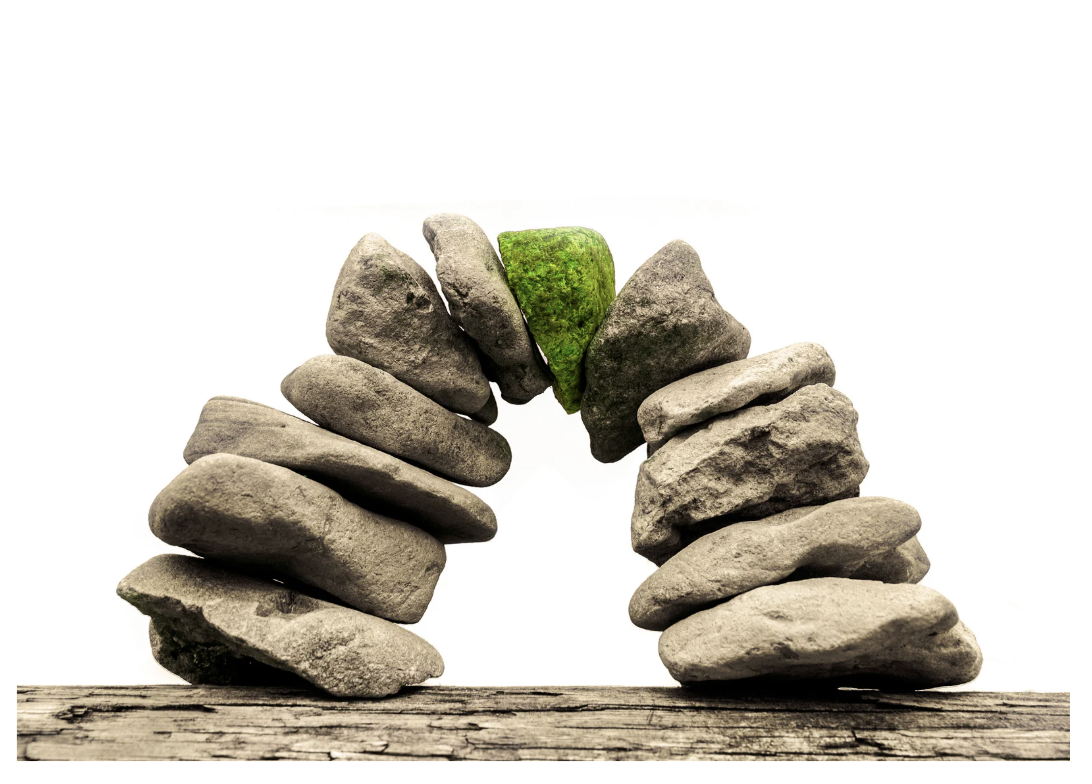
The green one is the keystone
A deep place inside of me is reminding me (again) that I am not my practices, and that if I’m being naturally drawn to ways of being that are leaving me feeling more like myself, it is wise to trust that.
The funny thing is that I’ve actually sat down at my home altar most days since releasing my Insight Timer streak. And that’s because I’m drawn to the practice of sitting down and listening for guidance from Spirit, connecting with my ancestors. Saying thank you for what I have has become integral to me. So my external practices are looking similar. The difference is that instead of guiding myself onto the meditation cushion every day, I’m feeling guided to the cushion. Sometimes - not every day.
It’s cool to feel the spaciousness of releasing self-expectations around sitting in meditation. Is meditation good for me? Absolutely. Is it helpful to take my foot off the gas sometimes and see whether I’m able to coast — to put less energy into “making it happen”? Yeah, definitely. Our habits make up a good portion of our personas; there’s beauty in exploring habits and willpower, and in staying curious about who I’m becoming.
Not to mention, one of the most important aspects of behavior change - one that we humans with our negative mental bias tend to forget - is that you can’t just stop a behavior very effectively. The best way to transition out of a behavior is to choose a behavior (or several) to replace it. And with these somatic microhabits leaving me feeling different -- better and more settled more often -- I feel spaciously supported in a way that feels novel (scratches the vata itch for change) and consistent (scratches the pitta itch for persistence).
For those of us who have found healing through spiritual practices like yoga, meditation, and mantra, letting go of them for whatever reason can be anxiety-producing. As important as they are, I’m really excited to keep working with my nervous system as a primary interface. It’s a feeling of cutting out the middleman.
When we attend to our back bodies, we can stimulate the parasympathetic (PNS - rest & digest) nervous system. We need healthy activation in both the PNS and the sympathetic nervous system, and orienting in space as in the video exercise at the top of this piece is a great way to explore creating a calmer state in your body.
**Special thanks to Kimberly Ann Johnson - the exercise in the video is modified from ones in her book, Call of the Wild.